
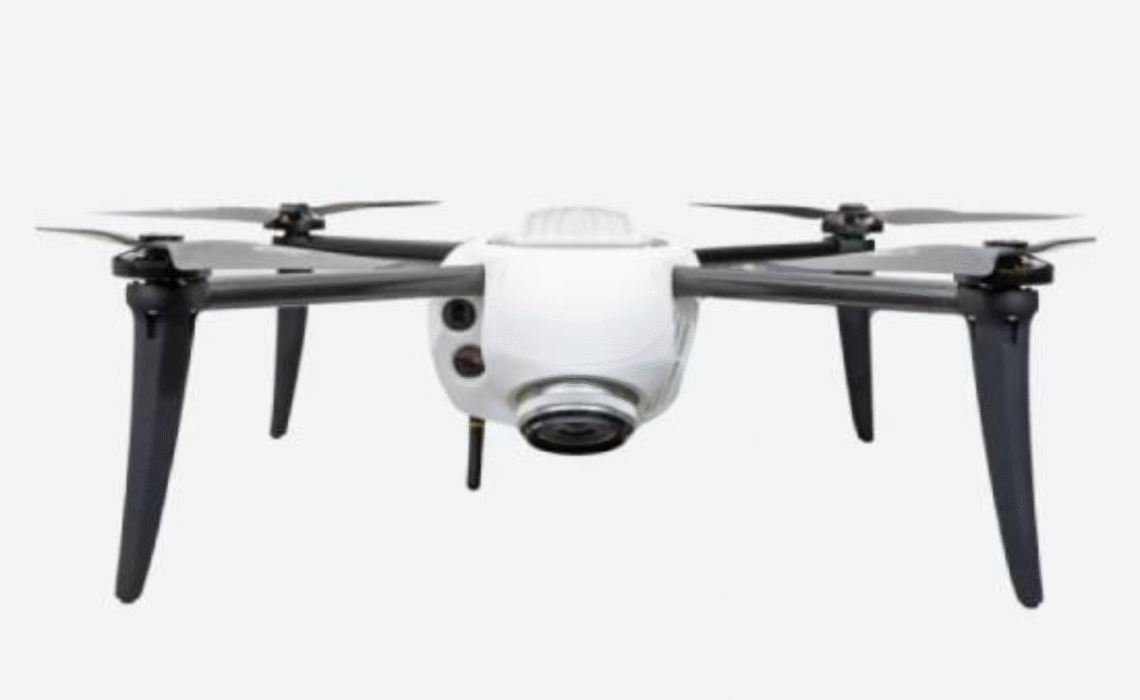
Drones are rapidly becoming essential parts of our critical infrastructure. From inspecting bridges and railways to monitoring energy grids and supporting emergency response, autonomous aerial systems are transforming how cities and industries operate. While software, AI, and sensor technology advance quickly, hardware development often struggles to keep pace. To unlock the next phase of drone innovation, manufacturing itself must become smarter.
This shift is crucial for both the engineers building the drones and the city planners integrating them into urban ecosystems. Traditional manufacturing can no longer support the speed and flexibility this industry demands. Drone hardware manufacturing must evolve from tooling-based rigidity to digital-first agility.
The Hardware Challenge
Drone development is inherently iterative. Airframes evolve, payload requirements change, and regulations shift. Each adjustment can require new mounts, housings, or structural changes to optimize weight and performance. For drone manufacturers, this presents a significant challenge.
Traditional manufacturing, especially tooling-based processes like injection molding, isn’t built for this level of agility. Long lead times of several weeks, high minimum order quantities, and rigid production setups can slow innovation.
For drone companies for infrastructure inspection, defense, offshore energy, or public safety, this manufacturing delay is inconvenient. Digital manufacturing removes this constraint. Without tooling dependencies, teams can move from CAD to the physical part in days. Design changes are implemented immediately. Low-volume production becomes economically viable. Iteration becomes a strategic advantage rather than a cost burden.
Lightweighting for Performance
In the drone industry, every gram counts. Weight directly impacts flight time, energy efficiency, and payload capacity. This is where smarter manufacturing, particularly additive manufacturing provides a distinct advantage.
Materials such as PA12 (Nylon 12), carbon-fiber-reinforced polymers, and lightweight aluminum alloys allow engineers to optimize strength-to-weight ratios while maintaining durability in demanding environments.
Engineers can now design complex, topology-optimized geometries that were previously impossible to produce. In one case, a drone manufacturer consolidated four structural components into a single printed part. The redesign achieved a 30 percent weight reduction while simplifying assembly and improving reliability. For end users performing extended inspections or emergency deployments, that weight reduction translated directly into longer operational windows and improved effectiveness. Lightweighting is not a design trend. It is a performance requirement.
Customization at Scale
Commercial drone applications are rarely one-size-fits-all. An agricultural drone has different hardware needs than one used for inspecting offshore wind farms. City planners may require specialized drones for monitoring traffic flow versus those used for air quality sensing.
Conventional manufacturing treats customization as costly. Digital manufacturing treats it as standard.
Low-volume production runs, rapid iteration cycles, and design variations can be executed without new tooling investment. Companies can maintain digital inventories rather than physical stock, producing components on demand when needed. This “digital warehouse” model enables on-demand manufacturing for aerospace and drone applications, reducing inventory risk while supporting regulatory flexibility
Sustainability and Resilience
As drone fleets scale, sustainability becomes part of the conversation.
Localized, on-demand manufacturing shortens supply chains and reduces dependency on global logistics networks. Instead of storing excess parts or shipping components across continents, production can occur closer to the point of use. This approach reduces overproduction, minimizes material waste, and strengthens supply chain resilience in volatile markets.
For municipalities investing in sustainable mobility and infrastructure resilience, distributed manufacturing aligns with broader environmental and operational goals.
Smarter manufacturing is not only about speed. It is about long-term resilience.
Building the Future of Drone Hardware
Drone innovation depends on more than just software breakthroughs; it requires hardware that can evolve just as quickly. Companies that adopt smarter, digital-first manufacturing will be better positioned to iterate faster, reduce risk, and scale efficiently.
At Shapeways, we enable additive manufacturing for drones through an on-demand platform that supports lightweight, application-specific components across prototype and production volumes.
We will be at Amsterdam Drone Week (ADW) this March to discuss how digital manufacturing accelerates drone development.
If you are attending ADW, let’s connect.