
Medical device development innovation rarely follows a straight line.
Development teams are expected to move quickly, validate concepts with clinicians, navigate regulatory requirements, and bring products to market faster than ever before. At the same time, they must manage cost, quality, and scalability, often with limited certainty about future demand.
The challenge is that no single manufacturing technology is optimized for every stage of product development.
A process that excels at rapid iteration may not be ideal for high-volume production. Likewise, a process designed for mass manufacturing can introduce unnecessary cost and risk during early development.
That is why many medical device companies are adopting a hybrid manufacturing strategy.
By combining additive manufacturing with injection molding, organizations can accelerate development, reduce risk, and create a smoother path from prototype to production.
The Problem with Traditional Development Approaches
Historically, medical device manufacturers have faced a difficult decision early in the development process.
Investing in injection molding tooling too soon can lock teams into designs that have not been fully validated. Design changes become expensive, timelines extend, and development budgets increase.
Waiting too long to prepare for production creates a different problem. Products may be clinically validated but not ready to scale when market demand arrives.
Neither scenario is ideal.
Successful medical device development requires a manufacturing strategy that supports both rapid learning and future growth.
Accelerating Innovation Through Additive Manufacturing
Additive manufacturing enables development teams to move quickly during the most critical stages of product development.
Engineers can transform digital designs into functional parts within days, allowing teams to evaluate ergonomics, validate assemblies, test functionality, and gather clinician feedback early in the process.
This approach is particularly valuable for:
- Surgical instruments and accessories
- Wearable medical devices
- Diagnostic equipment components
- Orthopedic braces and supports
- Rehabilitation and mobility products
- Patient-specific medical solutions
Because additive manufacturing eliminates the need for tooling, teams can iterate repeatedly without significant additional cost.
The result is faster learning, better designs, and more confidence before making larger production investments.
Bridging the Gap Between Prototype and Production
One of the biggest misconceptions in medical manufacturing is that companies must choose between additive manufacturing and injection molding.
In reality, the strongest development strategies use both.
Once a design reaches a mature stage, additive manufacturing can continue supporting bridge manufacturing and pilot production runs. These low-volume production batches allow companies to validate demand, support clinical evaluations, and gather market feedback before committing to full-scale manufacturing.
This reduces both financial and operational risk.
Instead of making a large tooling investment based on assumptions, manufacturers can make decisions based on real-world performance and customer feedback.
Scaling Efficiently with Injection Molding
As production volumes increase, economics begin to change.
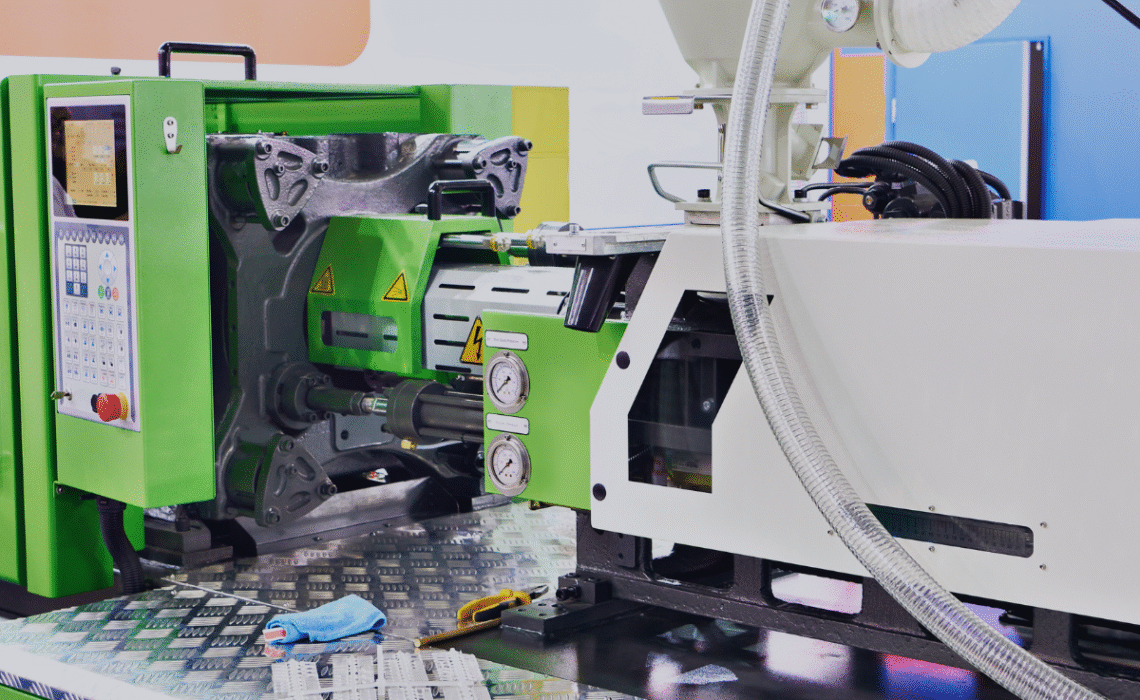
Injection molding becomes the preferred solution for high-volume manufacturing because it delivers exceptional repeatability, material consistency, and low per-unit costs at scale.
By the time a product reaches this stage, additive manufacturing has already served its purpose. Design risks have been reduced, functionality has been validated, and product requirements are better understood.
The transition to injection molding becomes significantly smoother because critical design decisions have already been tested and refined.
A Smarter Manufacturing Strategy for Medical Devices
The most successful medical device companies no longer think in terms of choosing one manufacturing technology over another.
Instead, they focus on selecting the right manufacturing process at the right stage of development.
Additive manufacturing enables rapid innovation. Bridge manufacturing reduces risk during commercialization. Injection molding supports efficient high-volume production.
Together, these technologies create a development pathway that is faster, more flexible, and better aligned with the realities of modern medical device innovation.
From Concept to Commercialization
Bringing a medical device to market requires more than a great idea. It requires a manufacturing strategy capable of supporting every phase of development.
At Shapeways, we help medical device innovators move from concept validation to production through additive manufacturing, bridge manufacturing, and production-scale manufacturing solutions. Whether you are developing a new wearable medical device, an orthopedic product, or a specialized healthcare component, our team can help you choose the right manufacturing approach at every stage of the product lifecycle.
Because successful medical innovation is not about choosing one manufacturing technology. It is about knowing when to use each one.
Frequently Asked Questions (FAQ)
When should a medical project move from 3D printing to injection molding?
Manufacturers should shift from 3D printing to injection molding once the product design is finalized, clinical testing is successful, and the production volume requirements exceed the cost-efficiency threshold of additive manufacturing.
Are injection molded parts safe for medical use?
Yes. Injection molding supports a wide variety of FDA-approved, medical-grade thermoplastics and silicones. These materials are specifically designed to meet strict biocompatibility and sterilization standards required for healthcare settings.
How does hybrid manufacturing reduce financial risks?
Hybrid manufacturing lowers financial risk by delaying the high costs of steel or aluminum tooling until the product design is completely validated through inexpensive 3D printed prototypes.
What is bridge manufacturing and why is it important for medical devices?
Bridge manufacturing is the production phase between prototyping and full-scale manufacturing. It allows medical device companies to produce low-volume batches for clinical evaluations, pilot launches, and early market demand without immediately investing in expensive production tooling.
What types of medical devices benefit most from hybrid manufacturing?
Hybrid manufacturing is particularly valuable for wearable medical devices, diagnostic equipment, orthopedic products, rehabilitation devices, surgical instruments, and healthcare technology products that require rapid development followed by scalable production.
How does additive manufacturing accelerate medical device development?
Additive manufacturing allows engineers to quickly produce and test design iterations without tooling constraints. This enables faster validation, earlier clinician feedback, and shorter development cycles, helping companies bring products to market more efficiently.
Can hybrid manufacturing support patient-specific medical products?
Yes. Additive manufacturing can be used to create patient-specific components such as orthoses, prosthetics, braces, and device interfaces, while injection molding can support standardized components when higher production volumes are required.
How do manufacturers decide which manufacturing process to use?
The right manufacturing process depends on the product’s development stage, production volume, material requirements, regulatory considerations, and cost objectives. Many medical device companies use additive manufacturing during development and bridge production before transitioning to injection molding for large-scale manufacturing.