
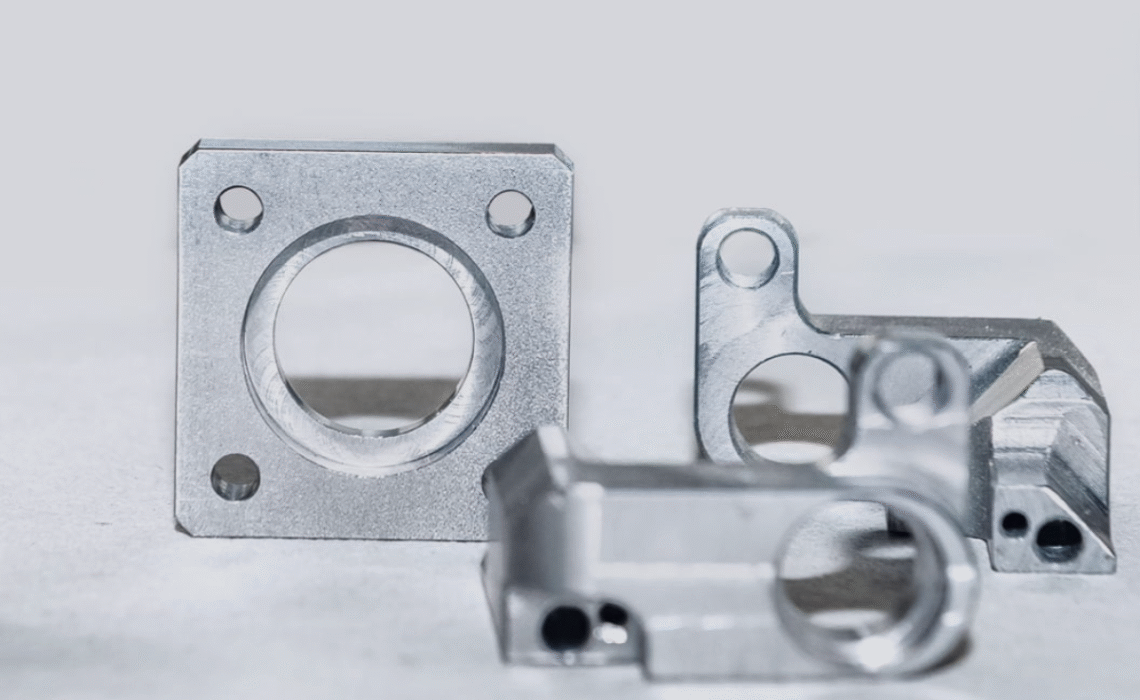
Most CNC projects don’t fail because of machining. They fail because of design.
Overly tight tolerances, inaccessible features, or non-standard tooling can easily double costs and delay production.
The difference between a part that is “machinable” and one that is optimized often comes down to a few key design decisions.
Following proper design guidelines ensures that your parts are manufacturable, cost-effective, and high-performing. Whether you’re a seasoned engineer or a product designer exploring CNC capabilities, understanding these best practices will help you take full advantage of CNC machining.
1. Understand CNC Machining Constraints
Before designing for CNC machining, it’s important to know the capabilities and limitations of the process:
- Tool Access: CNC machines remove material using cutting tools. Features like deep pockets or narrow slots require careful planning to ensure the tool can reach all surfaces.
- Minimum Wall Thickness: Extremely thin walls may deform during machining or fail under stress. Each material has recommended minimum wall thicknesses.
- Tolerances: CNC machining can achieve very tight tolerances, Extremely small features can increase machining time significantly, often driving costs up by 2–3×. Knowing standard tolerance ranges helps optimize design for manufacturability.
2. Use Rounded Corners Instead of Sharp Internal Angles
Sharp internal corners are difficult for cutting tools to produce. Instead, use fillets or radii to reduce stress concentrations and improve machinability. This also improves part strength and reduces the risk of cracking or material deformation.
3. Optimize Wall Thickness and Feature Sizes
When designing parts for CNC machining, wall thickness plays an important role in both manufacturability and part stability. As a general guideline, walls should be no thinner than 0.8 mm, although 1.5 mm is recommended to ensure better strength and consistency during machining.
For unsupported walls, which are features that are only connected on one side, extra care is needed. These should have a minimum thickness of 1.5 mm, with 2.5 mm recommended to prevent vibrations, deformation, or potential damage during the machining process.
4. Design for Standard Tooling
CNC machining uses standard cutting tools with specific diameters and lengths. Designing features that accommodate standard tooling ensures better precision and reduces production time. For example:
- Avoid internal slots smaller than the smallest available end mill.
- Ensure holes and pockets can be reached without custom tools.
5. Plan for Tolerances and Assembly
- Decide which dimensions are critical for your design and require tight tolerances.
- Features like mating surfaces, holes for fasteners, and alignment tabs often need tighter tolerances than cosmetic surfaces.
- Overly tight tolerances across all features can increase cost unnecessarily.
- CNC machining produces clean, precise threads directly in the part. No inserts, no secondary operations, no fuss. Standard threads from 2mm diameter and above are supported. Call out your thread specification on the technical drawing and it will be machined to tolerance, ready to assemble straight off the machine
6. Combine Parts When Possible
CNC machining excels at producing complex, multi-feature components from a single block of material, eliminating joints, welds, and fasteners that would be unavoidable with other manufacturing methods. A bracket, housing, and mounting interface that might require three separate fabricated parts can often be machined as one. This reduces assembly time, eliminates tolerance stack-up across joints, and produces a structurally stronger result.
When consolidating features, ensure all surfaces remain accessible to the cutting tool and that the part can be securely fixtured during machining
7. Leverage Hybrid Manufacturing Approaches
CNC machining works exceptionally well alongside additive manufacturing. For example:
- 3D print complex geometries and then machine critical surfaces.
- Use CNC for high-strength components while additive methods produce intricate features.
This hybrid approach combines the flexibility of AM with the precision of CNC machining, giving you the best of both worlds.
At Shapeways, many customers combine additive manufacturing for complex geometries with CNC machining for critical tolerances, reducing both cost and lead time
8. Surface Finish Considerations
CNC machining provides excellent surface finishes, but different finishes may be required depending on the application. For example:
- Smooth finishes for mating surfaces or aesthetic components
- Textured finishes for grips or structural parts
- Polishing or post-machining may be needed for specialized surfaces
The standard as-machined surface finish for CNC parts is Ra 3.2 μm. A finer finish of Ra 1.6 μm is available on request, when specified in technical specifications.
9. Design with Material Properties in Mind
The type of material you choose affects wall thickness, tolerances, and tool accessibility. Metals, plastics, and composites behave differently under machining forces. Always consult material guidelines and consider how machining affects strength, durability, and thermal properties.
Optimize Your CNC Designs with Shapeways
At Shapeways, engineers and designers now have access to both CNC machining and additive manufacturing, making it easier than ever to bring complex parts to life. By following proper CNC design guidelines, you can produce high-precision, functional components optimized for performance and manufacturability.
Whether you’re producing UAV components, robotics parts, or custom prototypes, Shapeways provides the tools, materials, and expertise to turn your designs into high-quality machined parts. Explore CNC machining capabilities and start designing smarter today: https://www.shapeways.com