
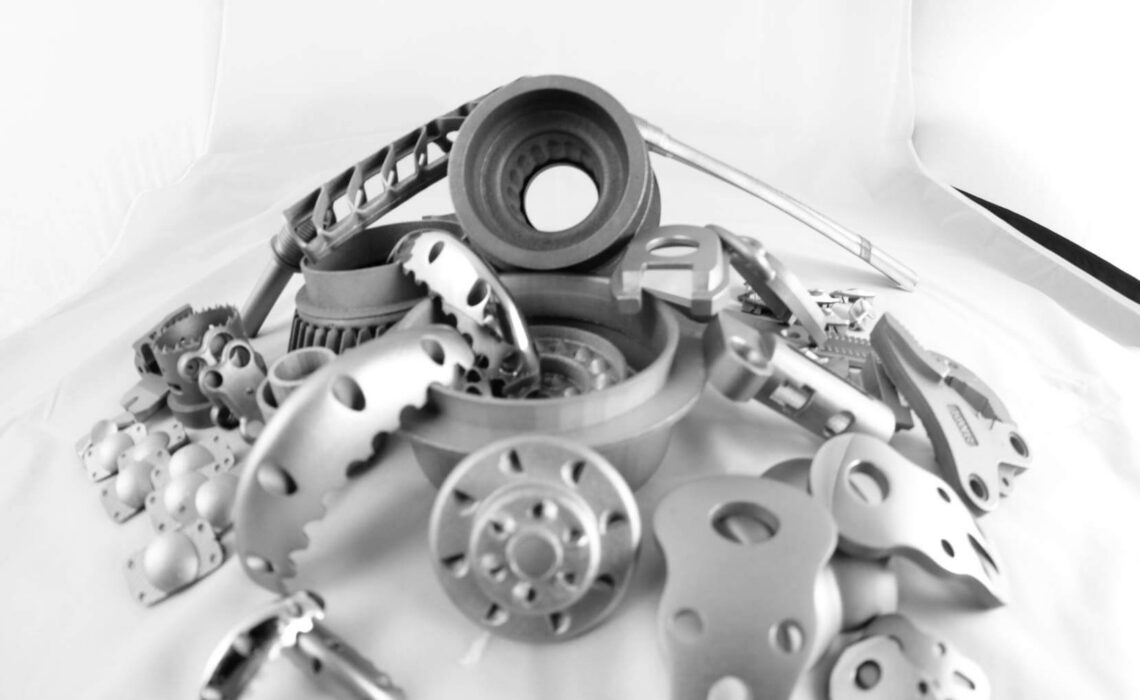
As we continue to explore the materials that drive additive manufacturing forward, our Material Spotlight Series turns to a true powerhouse of the industry: Stainless Steel. While flexible materials like TPE open doors for elasticity, stainless steel offers the unyielding strength and corrosion resistance essential for high-performance applications. By combining this trusted industrial material with the design freedom of 3D printing, we are empowering engineers to rethink what is possible in metal manufacturing.
What is Stainless Steel in Additive Manufacturing?
Stainless steel is an alloy of iron known for its exceptional resistance to rust, primarily due to its chromium content. In additive manufacturing, we use fine metal powders and fuse them layer by layer to create fully dense, functional parts.
Two of the most prominent alloys we work with are Stainless Steel 17-4PH and Stainless Steel 316L. Both materials maintain the mechanical properties expected from traditional manufacturing methods, such as high tensile strength and hardness. It enables complex geometries, such as intricate lattice structures or internal cooling channels, that casting or machining simply cannot achieve. In many cases, metal 3D printing also reduces material waste and lowers overall production costs compared to CNC machining.
Whether you are prototyping a new mechanical assembly or producing end-use parts for harsh environments, these alloys provide the durability you need.
How Is Stainless Steel Printed?
To deliver the high density and detail required for industrial applications, we typically employ Binder Jetting or Selective Laser Melting (SLM) technologies.
In Binder Jetting, a liquid binding agent is selectively deposited onto a layer of stainless steel powder. This process is repeated layer by layer until the part is complete. The “green” part is then cured and sintered in a furnace, where the binder is removed and the metal particles fuse together to form a solid metal component. This method allows for batch production and high efficiency, ensuring that we can scale with your needs from prototype to production.
Applications: What Can You Make with Stainless Steel?
The versatility of stainless steel allows it to serve a vast array of industries. From medical instruments to heavy machinery, its applications are as diverse as the sectors we partner with.
| Industry | Application Examples |
| Medical | Surgical tools, orthopedic implants, sterilization trays, dental devices. |
| Aerospace | Fuel nozzles, brackets, heat exchangers, engine components. |
| Automotive | Exhaust manifolds, turbocharger components, custom tooling, jigs and fixtures. |
| Industrial | High-pressure valves, pump impellers, corrosion-resistant fittings, custom gears. |
| Consumer Goods | Luxury watch cases, jewelry, durable buckles, custom hardware. |
17-4PH vs. 316L: Which Alloy Should You Choose?
While both alloys offer superior performance, selecting the right one depends on your specific project requirements.
Stainless Steel 17-4PH: Is a martensitic steel known for its high strength and hardness. It is magnetic and heat-treatable, making it the go-to choice for functional components that need to endure high stress and wear.
Stainless Steel 316L: Is an austenitic steel prioritizing corrosion resistance, also known as surgical steel. It is non-magnetic and offers excellent ductility. If your part will operate in harsh chemical environments, marine conditions, or food-grade applications, 316L often provides the better solution.
The Future of Stainless Steel in Manufacturing
We see a bright future where metal 3D printing becomes omnipresent as plastic printing. As the technology matures, we anticipate even faster production speeds and broader alloy availability, further reducing the barriers to entry for metal manufacturing. We are committed to ensuring that high-performance materials like Stainless Steel 17-4PH and 316L are accessible, reliable, and ready to bring your most ambitious ideas to life.
If you’re ready to bring your ideas to success, we’re here to help. Send us a quotation request or Contact us , and we will collaborate with you to make it happen.