
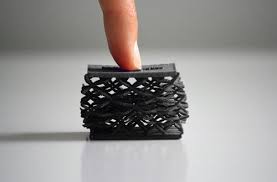
Additive manufacturing continues to push the boundaries of what is possible, and material innovation is at the heart of this progress. While rigid plastics have long been a staple, the demand for flexible, durable components has brought materials in the class of Thermoplastic Elastomer (TPE) to the forefront. TPE combines the functional performance of rubber with the manufacturing ease of thermoplastics, opening up a new world of possibilities for designers and engineers.
What is TPE?
Thermoplastic Elastomer (TPE) is a class of polymers that behaves like rubber at room temperature. However, when heated, it softens and flows like plastic. Manufacturers can reshape and reuse it multiple times.
Unlike thermoset rubbers, which undergo an irreversible chemical change when cured. TPEs can be re-melted and reformed multiple times without significant degradation. This characteristic makes them exceptionally well-suited for manufacturing processes like 3D printing and injection molding. TPE is not a single material but a family of polymers, with Thermoplastic Polyurethane (TPU) being one of its most well-known and widely used variants in additive manufacturing.
How is TPE Printed: SLS Process
Manufacturers typically print TPE using Selective Laser Sintering (SLS). This powder-based process produces strong, flexible parts without support structures.
Here is a look at the SLS printing process for TPE:
- Preparation: A high-resolution 3D model is uploaded to the printer’s software. The build chamber is then preheated to a temperature just below the TPE powder’s melting point. Then, it spreads a thin layer of powder across the platform.
- Sintering: A powerful CO2 laser scans the cross-section of the part, selectively fusing the TPE powder particles together layer by layer. The unfused powder surrounding the part acts as a natural support system, enabling the creation of complex and overhanging features.
- Cooling: After the printing is complete, the entire build chamber, containing the fused parts and surrounding powder, undergoes a carefully controlled cooling process. This step is critical for ensuring dimensional accuracy and preventing warping.
- Post-Processing: Finally, technicians remove the parts from the powder bed. They clean off excess powder using media blasting. The team then recycles unused powder for future print jobs making SLS both efficient and sustainable.
Applications: What Can You Make with TPE?
The properties of TPE make it a versatile material suitable for a wide array of industries and applications. Its ability to absorb impact, provide a soft-touch grip, and create flexible seals opens up new avenues for product innovation.
| Industry | TPE Application Examples |
| Consumer Goods | Handles and grips for tools, soft-touch surfaces on electronics, protective phone cases, shoe soles, wearable device straps. |
| Medical | Anatomical models for surgical planning, custom prosthetics, flexible tubing, orthopedic braces, seals for medical devices. |
| Automotive | Gaskets and seals, interior trim components, dashboard elements, dust covers, vibration dampeners. |
| Robotics & Industrial | Protective bumpers, flexible grippers for robotic arms, conveyor belt components, shock absorbers, wire and cable jacketing. |
| Aerospace | Seals for cabin interiors, custom vibration-dampening pads, flexible ducting components, protective covers for sensitive equipment. |
Shaping the Future with TPE in Additive Manufacturing
The developments of TPE variants include enhanced properties, such as improved thermal resistance, biocompatibility certifications, and a wider range of Shore hardness values.
Many designers and engineers may not yet realize the extent to which TPE can solve real-world challenges or how to approach additive design to take full advantage of its strengths. Here at Shapeways we illuminate these possibilities so you can confidently explore the full scope of what’s achievable with flexible 3D printing materials.
Exploring flexible materials for your next project? Our team can help evaluate whether TPE is the right fit.
Up Next in the Material Spotlight Series:
👉Stainless Steel— Strength, Precision, and Industrial Performance