
Speed is now a quality metric and additive manufacturing for hardware development is a key driver. In hardware, every day and week of delay means missed revenue, lost advantage and rising costs. Engineering teams are under pressure to move faster, build smarter and stay resilient in a volatile supply chain. The question is not whether to innovate — it is how to do it without adding risk, overhead or delay.
That is where we come in.
The birth of accessible 3D printing
The first iPhone was launched in 2007 and immediately reshaped mobile telephony, mobile computing, digital photography and music consumption. Fast forward to 2025 and the latest iPhone is still obviously part of the same family. The form is familiar… but the capabilities are unrecognisably advanced.
Also in 2007, in the Incubator at Philips in Eindhoven, we were prototyping something of our own. That prototype officially launched as Shapeways in 2008. Just like the iPhone, our origins are still visible in what we do today. At launch our tagline was “Passionate about creating” — and that remains as true as ever.

Back then, what people created looked very different: a world away from what we’d call additive manufacturing for hardware development. In 2008 many customers customised so-called ‘light poems’ through the Shapeways Creator, or uploaded models built in Blender and Google SketchUp. Designs were simpler, the processes less complicated — even the renderings looked basic by today’s standards. But the essence was there: a new way of creating, open to anyone.
Lessons learned from millions of parts
In the years that followed we manufactured millions of parts, across every imaginable category of application. Just as the iPhone evolved from a novelty device into the central tool of modern life, our platform grew from an early experiment into an engine that powers serious hardware programmes.
Every part that we’ve built has taught us something about process control, design for manufacturability and quality assurance. We learned how to operate at the speed of our clients, ensure repeatable output and deliver anywhere in the world. Each iteration sharpened our understanding of where variability hides so we can eliminate it or account for it. In short, it’s set us up to lead manufacturing of the next generation of hardware.
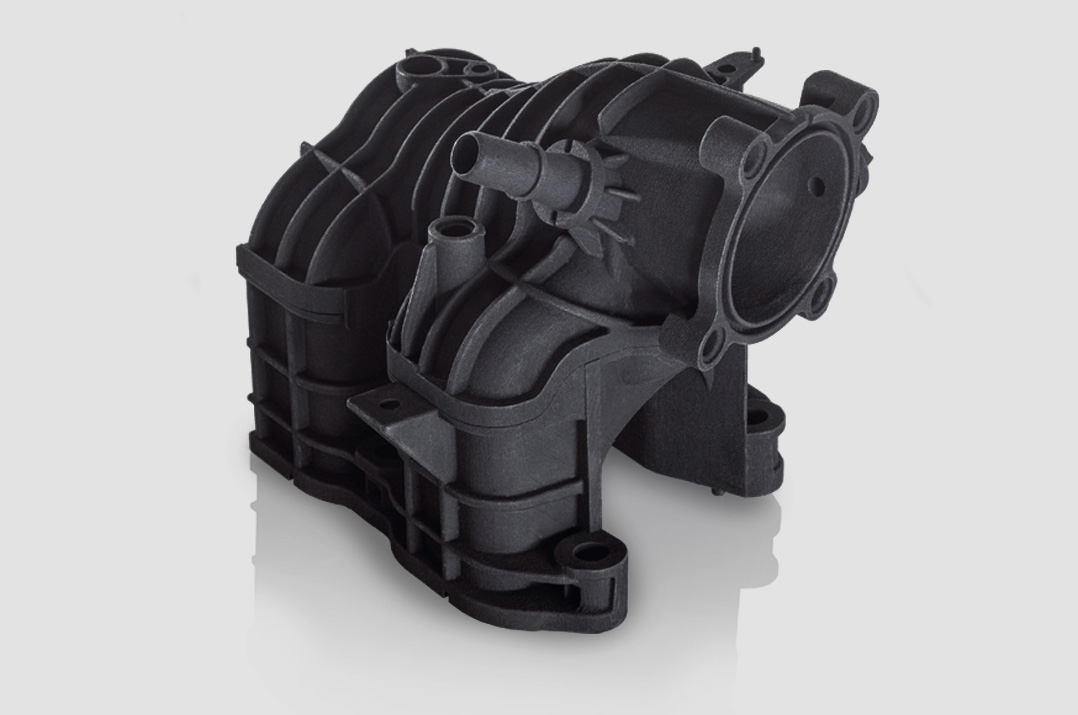
What began as a platform for makers has evolved and diversified. Through Thangs, our experience and passion is still brought to bear for designers and consumers, with a better experience than ever before. But we’ve also become a trusted partner for global engineering-led businesses. Today as Shapeways we focus squarely on helping hardware companies bring products to market faster with less risk and lower cost.
This means industrial-grade standards, reliable documentation, programme-level support and a team dedicated to helping companies move from prototype to production with confidence. It means being in the details of manufacturing so that you don’t have to be.
The four pillars of additive manufacturing for hardware development
Our evolution is anchored around four core pillars that directly address the needs of modern hardware businesses.
- Production and supply chain agility
Volatile demand and supply chain disruption are now the norm. Products have compressed lifecycles, with more SKUs and shorter in-use lives. Through flexible routing across multiple technologies and access to distributed production options, we help companies respond faster, reduce inventory and cut lead times dramatically. - Mass customisation
The explosion of SKUs and demand for customer-specific variants makes traditional tooling inefficient. We enable configure-to-order products without the burden of tooling or minimum order quantities. Digital workflows and digital inventory make mass customisation commercially viable. - Lifecycle management
At every stage of the product lifecycle, we provide timely solutions that let you focus on your business — from prototyping to short-run production, scaling up to series production and management of spare parts for in-service hardware. - Sustainable sourcing
Sustainability is only sustainable when it’s tied to business goals. With tool-less production, material efficiency and the ability to digitise spare parts, we support reduced waste, smarter logistics and the flexibility needed to manage commercial and environmental sustainability.
“Make what you need, when you need it, where it makes sense.”
Proof in practice
- Faster validation: we help engineering teams compress prototype cycles, lock designs earlier and save weeks of delay
- Digital spares: we enable companies to digitise long-tail SKUs, potentially eliminating costly tooling while improving service levels
- Custom enclosures and fixtures: our workflows support customised parts that reduce assembly times and streamline operations
Across industries the outcomes are consistent — shorter timelines, lower costs and more resilient supply chains.
What this means for manufacturers now
For engineering and operations leaders, the message is simple: you do not need to own machines to access industrial grade additive manufacturing for hardware development. Start with a single programme — whether it is a prototype-to-pilot run or digitising spare parts — and scale as confidence and data accumulate.
Formnext is the perfect moment to explore what that could mean for your business. Meet us there and let’s talk about your next generation hardware and explore how additive manufacturing can help ease your product development.
Our leadership team will be on the show floor for the event. If you are finding that traditional manufacturing is no longer serving your projects, book time with our CEO or COO to discuss a faster, more flexible future.
Seventeen years on from our launch, you can still see our roots — but just like the iPhone, our capabilities are wildly different. The goal remains the same though: to make creating easier, faster and more powerful than ever before.