
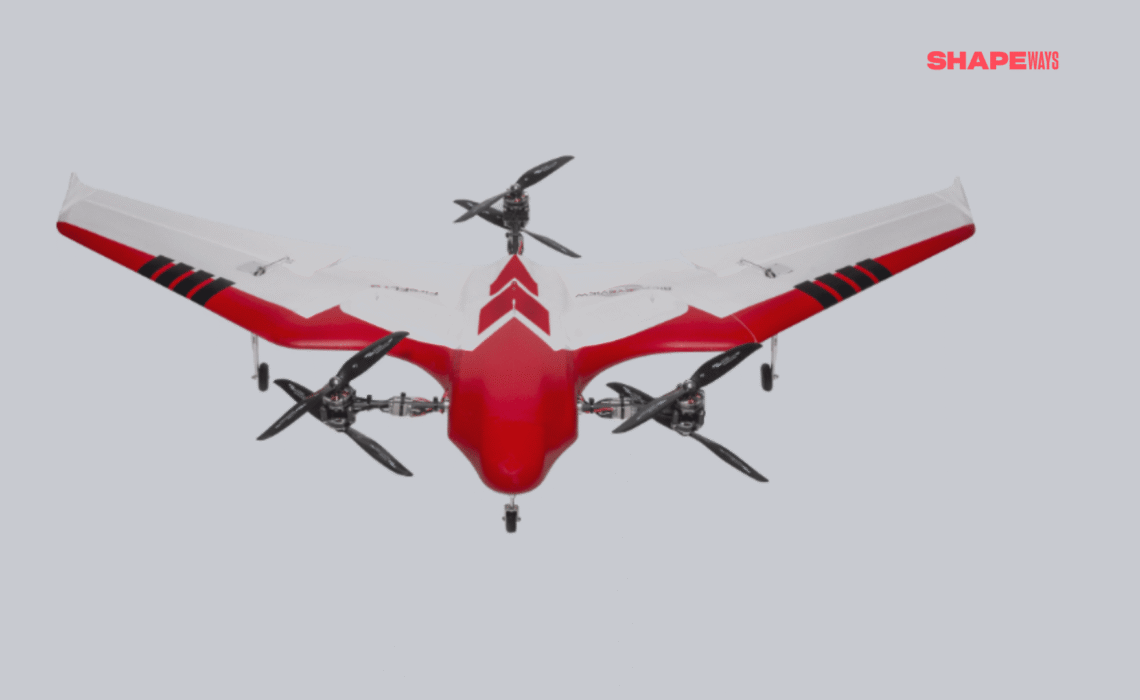
Defense technologies are becoming more complex while supply chains are becoming more fragile. From unmanned drones to advanced aerospace systems, engineers need faster ways to design, prototype, and manufacture specialized components. Additive manufacturing is emerging as a powerful solution, allowing defense innovators to accelerate development while improving supply chain resilience.
By building parts layer by layer from digital designs, additive manufacturing enables faster iteration, lightweight structures, and on-demand production. As defense organizations seek greater flexibility and technological advantage, this manufacturing approach is becoming an increasingly important capability.
Highlights
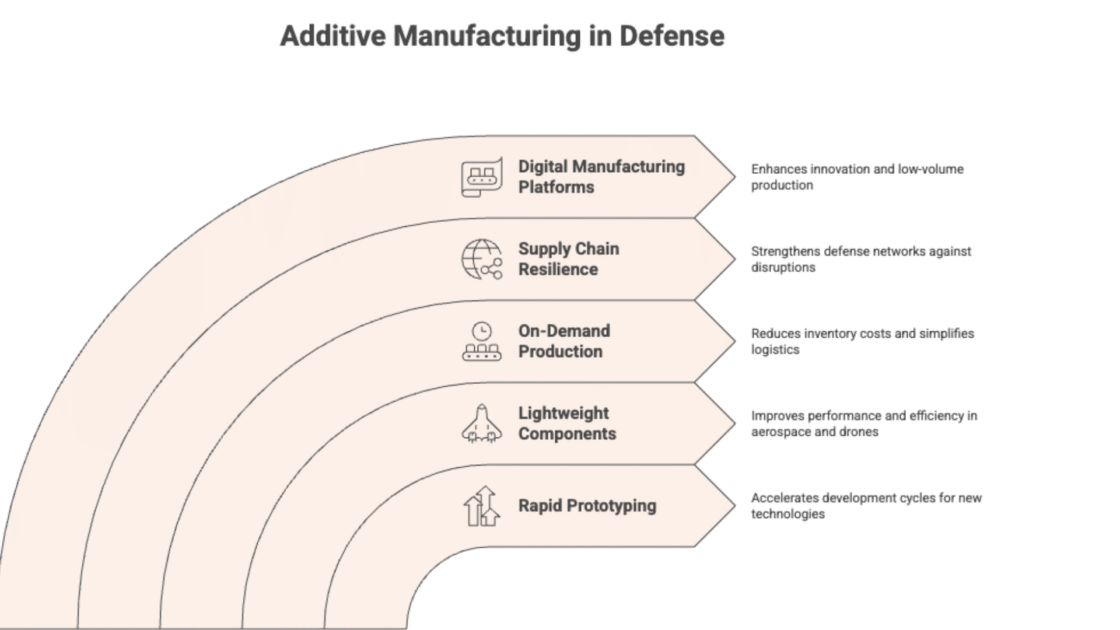
• Additive manufacturing enables rapid prototyping for defense technologies.
• Lightweight 3D printed components improve performance in drones and aerospace systems.
• On-demand manufacturing reduces spare part inventory and simplifies logistics.
• Distributed production strengthens defense supply chain resilience.
• Digital manufacturing platforms accelerate innovation and low-volume production.
Why Additive Manufacturing Is Strategic for Defense
Traditional defense manufacturing often depends on specialized tooling, long development cycles, and large production runs. While this model works well for large systems such as aircraft, naval vessels, or armored vehicles, it can be inefficient when producing specialized components or rapidly evolving technologies.
Additive manufacturing changes that dynamic. Engineers can move directly from a digital design to a physical part without molds, casting tools, or complex machining setups. This significantly reduces development time and allows teams to test and refine designs much faster.
For defense organizations, this creates several strategic advantages.
Rapid prototyping allows engineering teams to develop and test new technologies quickly, from drone systems to communication devices and vehicle components. Development cycles that once required months can now happen in days.
Additive manufacturing also enables lightweight and optimized designs. Engineers can create complex internal geometries that maintain structural strength while reducing weight. This is particularly valuable for aerospace platforms and unmanned systems, where lighter components improve performance and efficiency.
Another key benefit is on-demand production. Instead of maintaining large inventories of spare parts, organizations can produce components only when they are need them. This reduces storage costs and simplifies logistics.
Finally, additive manufacturing contributes to more resilient defense supply chains. Because organizations can produce parts locally or through distributed manufacturing networks, they reduce their dependence on long and vulnerable global supply chains.
Applications of Additive Manufacturing in Defense
Defense organizations already use additive manufacturing across a wide range of technologies.
One of the fastest growing applications is in unmanned systems. Drones and autonomous vehicles often require lightweight structures, customized mounts, and specialized housings for sensors and cameras. Additive manufacturing allows engineers to design and iterate these components quickly.
In aerospace and military aviation, engineers use additive manufacturing to produce brackets, ducts, structural supports, and other lightweight components. Optimized geometries can improve aircraft performance while maintaining structural integrity.
The technology is also valuable for maintenance and sustainment. Many military platforms remain in service for decades, and replacement parts can become difficult to source over time. With digital design files and additive manufacturing, components can be reproduced even when original tooling is no longer available.
Looking ahead, field manufacturing is becoming an emerging capability. Portable additive manufacturing systems may allow deployed teams to produce tools, replacement parts, or mission-specific equipment directly in operational environments.
How Shapeways Supports Aerospace and Defense Innovation
Shapeways is a digital manufacturing platform that provides industrial additive manufacturing, CNC machining, and low-volume production services. The company supports engineers and technology companies in industries such as aerospace, defense, robotics, and medical devices by enabling rapid prototyping and scalable production.
Through its manufacturing network, engineers can upload designs, select materials, and produce parts quickly. This short development cycle allows companies developing advanced technologies to test, refine, and bring products to market faster. Shapeways also provides access to industrial-grade materials and advanced manufacturing technologies capable of producing durable components for demanding applications.
Additive manufacturing is particularly well suited for low-volume production, making it ideal for specialized components that do not require mass manufacturing. This flexibility makes digital manufacturing platforms valuable partners for companies developing new defense technologies.
The Future of Defense Manufacturing
As defense technologies evolve and global supply chains become more complex, additive manufacturing is becoming a critical tool for innovation.
Combined with digital manufacturing platforms and distributed production networks, additive manufacturing enables a more flexible model of manufacturing. Instead of relying solely on centralized factories, future defense supply chains may involve networks of advanced manufacturing facilities capable of producing components on demand.
For defense innovators, this shift offers faster development cycles, more resilient supply chains, and greater freedom to design the next generation of aerospace and defense systems.
Frequently Asked Questions
What is additive manufacturing for Defense?
Additive manufacturing for defense refers to the use of industrial 3D printing technologies to design, prototype, and produce military components such as drone parts, aerospace structures, and replacement components for defense systems.
How is 3D printing used in military applications?
3D printing is used to manufacture lightweight aerospace components, drone structures, specialized housings, tools, and replacement parts for legacy military systems. It is also widely used for rapid prototyping during product development.
Why is additive manufacturing important for defense supply chains?
Additive manufacturing allows parts to be produced locally or on demand, reducing dependence on complex global supply chains and improving resilience during disruptions.