What is Metal 3D Printing?
Metal additive manufacturing technology like Selective Laser Melting, and Lost Wax Casting make it possible for Shapeways customers to enjoy metal 3D printed parts that are extremely strong, complex, and lightweight.
History of Metal Printing
Current Trends in 3D Printing Metal
Metal 3D printing is transforming how companies develop and manufacture complex, high-performance parts. As industries such as aerospace, defense, healthcare, and automotive accelerate adoption of additive manufacturing, demand for advanced metal production technologies continues to grow.
Selective Laser Melting (SLM) is one of the leading metal 3D printing technologies, enabling the production of lightweight, durable, and highly detailed components that would be difficult or impossible to manufacture using traditional methods.
While industrial metal 3D printers require significant investment, manufacturers can access the benefits of metal additive manufacturing without the cost and complexity of owning equipment. Shapeways provides on-demand metal 3D printing services that help businesses move from prototype to production faster, with expert support, industrial-grade quality, and scalable manufacturing capabilities.
Metal 3D printing emerged in the late 1980s as researchers explored new ways to accelerate prototyping and manufacturing. Early developments in Selective Laser Sintering (SLS) at the University of Texas at Austin helped lay the groundwork for metal additive manufacturing.
At the same time, researchers at the Fraunhofer Institute developed Selective Laser Melting (SLM), also known as Direct Metal Laser Sintering (DMLS), along with Electron Beam Melting (EBM). These technologies enabled the production of fully dense metal parts directly from digital designs and continue to power many industrial metal 3D printing applications today.
Metal 3D Printing Technology and Materials
Selective Laser Melting
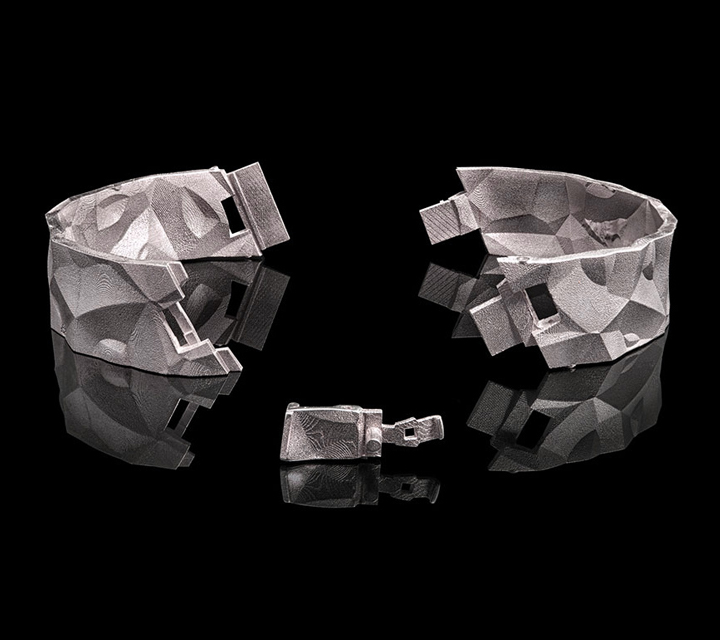
During SLM 3D printing, an incredibly precise laser acts as the impetus for welding metal powder particles together within an enclosed industrial 3D printer. Layer by layer, the powder is melted until the desired structure is complete, with the part anchored to the build plate (along with support structures) and removed in post processing. At the end of the process, parts and any supports are removed, and the typically rough surface may be further machined.
Shapeways provides the following 3D printing materials for SLM 3D printing:
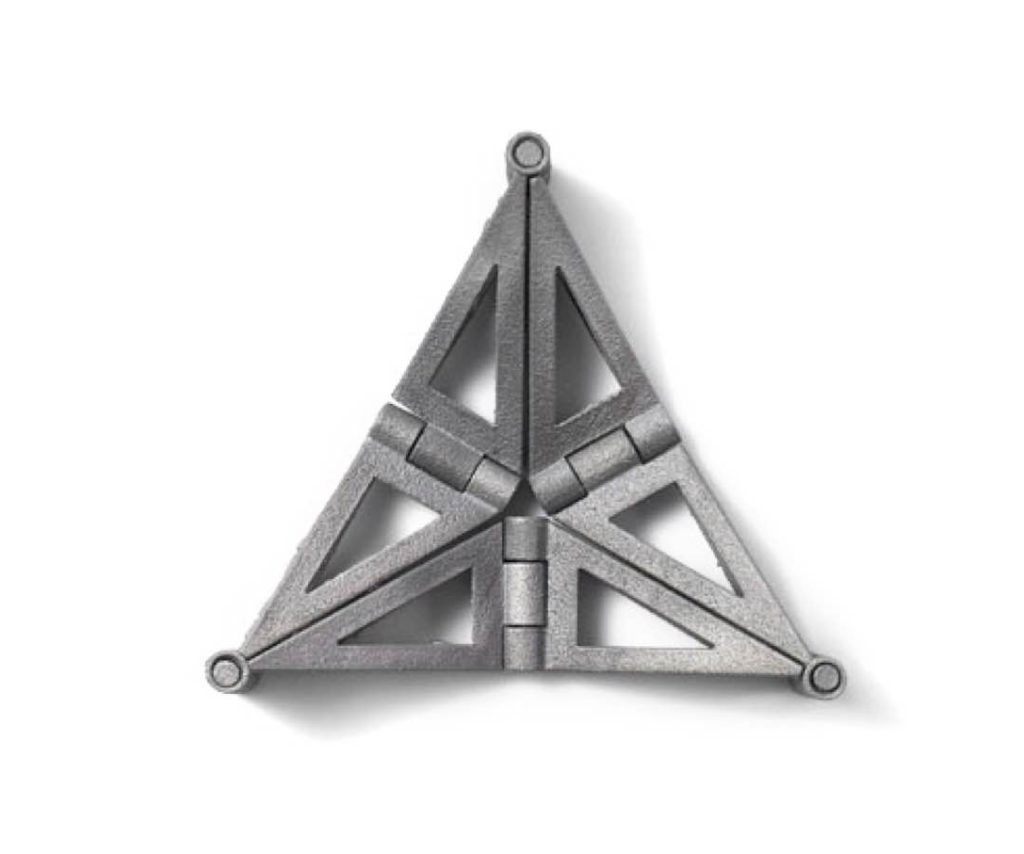
Aluminum
Shapeways customers rely on Aluminum for the following industrial applications:
- Aerospace
- Automotive
- Energy
- Machining
- Medical
- Robotics
Shapeways offers Aluminum in Standard finish only. Find out more about the design guidelines for this metal 3D printing material here.
Lost Wax Casting
For designers and engineers eager to try a variation on metal 3D printing technology–but with a fast and more economical edge–Lost Wax Casting is a great option. Paired with high-quality 3D print Lost Wax Casting materials and precious metals this technique is preferred by many Shapeways customers.
Also referred to as Investment Casting, Precision Casting, or even cire perdue (french), this unique technology has historically been recognized as a strong suit for foundries. Created around 5,000 years ago to make metal products and ammunition, Lost Wax Casting is performed in most instances by pouring red-hot, liquid metal into molds to create structures.
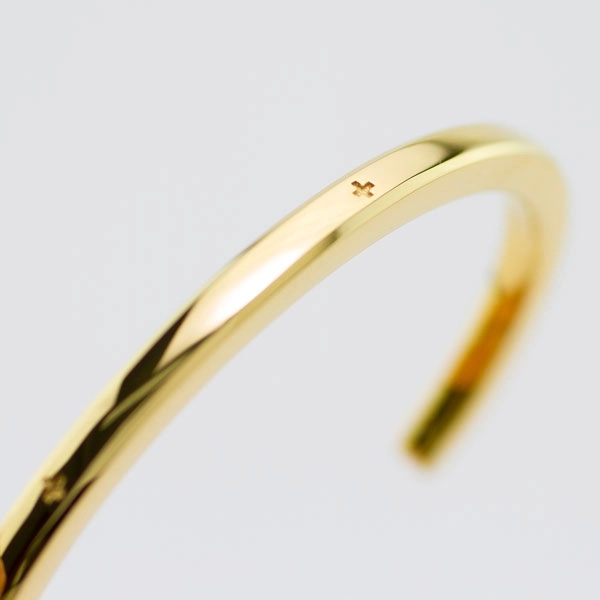
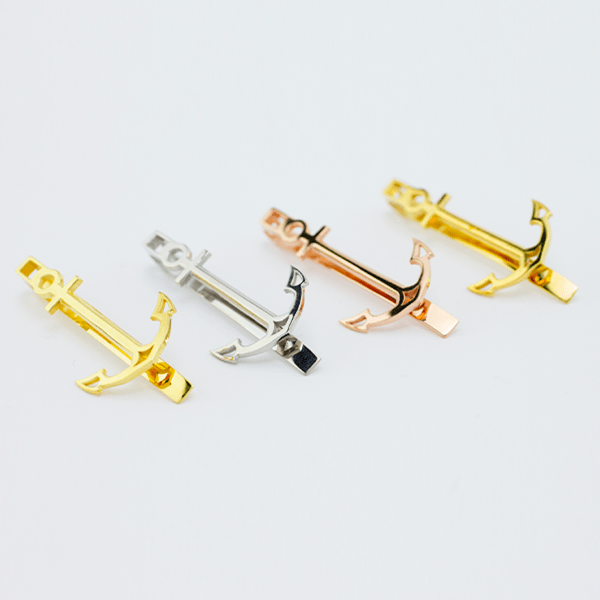
Molds for Lost Wax Casting are 3D printed with metal, thermoplastics like Nylon 12 [Versatile Plastic], MJF Plastic PA12, and other materials like Sandstone and Thermoplastic Polyurethan (TPU).
Wax inserts are most often used, structuring the interior of each mold. Once liquid metal is introduced to the mold for making the desired structure, all the wax melts and is drained. With 3D printing, the cooling process is more stable, and once complete, the solidified metal part can be removed. From there, each casting is an exact replication of the previous one. If the mold requires modifications, the design can be changed accordingly, and the part can be 3D printed again easily.
- Tin Brass – An alloy made up of 15% zinc, 5% tin, and 80% copper, Brass is available with a natural matte finish or a shiny polish, and is offered with Gold Plated Tin Brass (2.5 µm) or Rhodium Plated Tin Brass (0.5 µm).
- Tin Bronze – A copper-tin alloy made up of 10% tin and 90% copper, Bronze is used for jewelry with a vintage appearance, featuring a deep red color, marbling, and silver highlights. Bronze materials are available in natural matte or polished finishes.
- Copper – Featuring a red-orange color that oxidizes over time, turning to a deeper color, Copper is desired for its corrosion-resistant properties. This material is available in a natural or polished finish.
- Gold – Both 14-carat and 18-carat gold are available in yellow, white, and rose. Intricate designs can be made for valuable parts or fine jewelry with this precious metal.
- Platinum 950 / Ruthenium – One of the highest quality metal materials available, Platinum 950/ Ruthenium is a white metal used for luxury products. This material is available in a professional finish.
- Silver (930) – A high-quality alloy, Silver tends to be more malleable, and is popular in the jewelry industry. Silver (930) is offered with the following finishes: natural, polished, fine-detail polished, and antique.
Luxury Sterling Silver Jewelry with Handcrafted Touches
Testimonials
On-demand Metal 3D Printing
Improved efficiency via on-demand manufacturing also allows Shapeways customers to take their metal 3D printed products to market faster. Other great features include:
- Security in uploading 3D models to the digital inventory.
- Large 3D printed parts with reduced assemblies.
- Strong, lightweight parts that are highly optimized for long-term use.
- Less use of resources, materials, and energy.
Shapeways works with businesses of all types and sizes for on-demand metal 3D printing, allowing them to eliminate product backlogs and prevent supply chain issues. Lead times are eliminated, accelerating the prototyping and metal additive manufacturing process, resulting in a more agile supply chain.
3D printing with metal at Shapeways is as easy as uploading a 3D model (up to 20 a once). At that point, an instant quote is activated, along with automated printability analysis. Expedited shipping is available, whether customers need parts shipped to themselves or their own clients.