Additive or Traditional Manufacturing?
Scaling Production for Your Business Needs
Understanding the differences between additive manufacturing and traditional manufacturing begins with the most basic comparison: one adds materials to create a structure layer by layer, while the other uses a variety of subtractive methods to carve out a part.
Fewer Restrictions with Additive Manufacturing
With the ability to create complex geometries previously impossible to manufacture through traditional methods, 3D printing delivers unprecedented freedom in design and production—from the smallest to the largest scale. Although generally known for its benefits in low-volume production, thousands of parts can be made in one 3D printing build. Now though, more traditional methods may be necessary for serious mass production of identical parts.

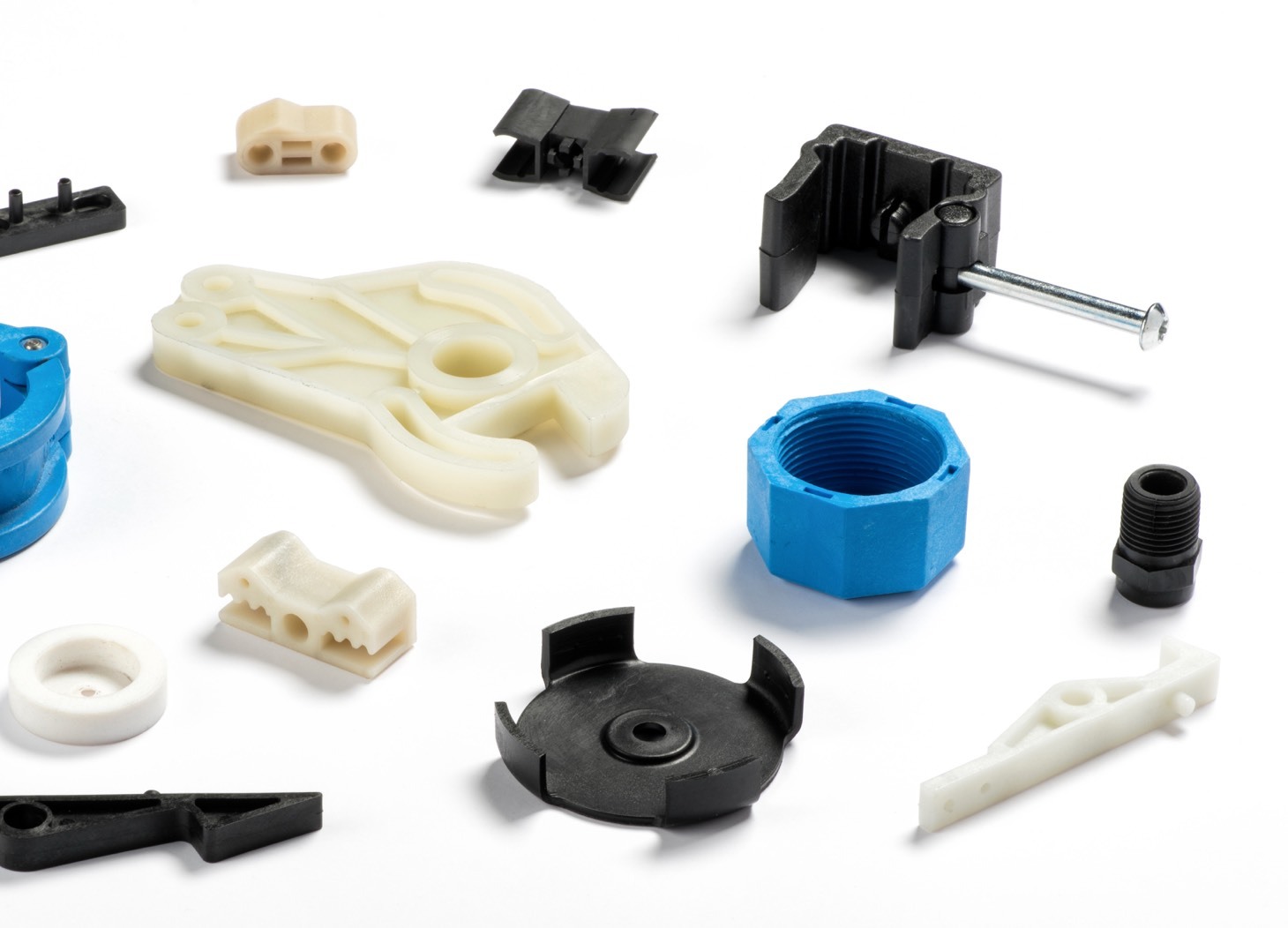
More Production Power with Traditional Manufacturing
With the ability to manufacture thousands—and even millions—of parts in mass production without any deviation in quality or detail, traditional manufacturing is often the most proficient route for satisfying customer demand.
Shapeways Traditional Manufacturing Offerings:
Traditional Manufacturing
Previous
Next
Technology Comparison Chart
Process
Description
Materials
Advantages
Disadvantages
Applications
Selective Laser Sintering
Powerful lasers sinter powder particles
Nylon 12 [Versatile Plastic]; Thermoplastic Polyurethane [TPU]; Nylon 11 [PA11 (SLS)]
No supports needed; large volumes of accurate, complex parts printed at once; moving or interlocking parts
Shrinkage, warping, poor surface quality
Mechanical parts, fixtures, prosthetics
Stereolithography
Laser technology converts resin into solid structures
Accura 60 Clear; Accura Xtreme Gray; Accura Xtreme White 200
Detailed structures with smooth surface finish, good dimensional accuracy
Supports required, slower production time, brittle parts
Prototypes, master patterns, snap-fit assemblies
Binder Jetting
Binding agents bond granular particles into structures
Stainless Steel 316L; Steel; Sandstone
Complex geometries; speed, precision and repeatability; no supports
Poor parts strength; post-processing required
Machinery and tooling, fasteners, heat exchangers
Material Jetting
A printhead dispenses droplets of a photosensitive material that solidifies under ultraviolet (UV) light, building a part layer-by-layer.
High Definition Full Color, Fine Detail Plastic, Multi-Color Polyjet
Complex geometries; speed, precision and repeatability; no supports
Poor parts strength; post-processing required
Machinery and tooling, fasteners, heat exchangers
CNC Machining
Pre-programmed computer software controls the subtractive manufacturing of industrial parts
Thermoplastics, nylons, acrylics, or metals like aluminum
Extreme precision; smooth surfaces; speed and efficiency; repeatability
Additional expense and labor; additional post-processing required
Auto parts; tools; mechanical devices; electronics housings and enclosures
Injection Molding
Metal molds are filled with molten liquid, solidifying into the desired structures
Thermoplastics; nylon
Accuracy, repeatability for mass production; speed; minimal post-processing
Tooling costs; design restrictions
Auto parts, electronics components; medical products; sporting goods
Urethane Casting
Silicone molds, which can be 3D printed, are filled with polyurethane, quickly forming into structures
Polyurethane
Simple yet versatile; good detail; good surface finish
Size restrictions; weaker parts; not good for complex geometries
Prototypes; medical devices; sports equipment; housings and enclosures
Sheet Metal Fabrication
High-quality metal structures are created with a variety of complex tools and processes
Aluminum, steel, stainless steel, copper, and more
Strong parts; durability; high production rates; heat resistance
Not good for complex geometries
Automotive; construction; medical tools and devices
Selecting the Best Manufacturing Process
Key points in choosing 3D printing usually boil down to the level of innovation and customization involved. The sky may be the limit in terms of design and production, but if business is booming, and customer demand has exploded, mass production of identical products for applications like automotive or aerospace, for example, may be the best route.

Contact Sales
Ready to get started?
From product development to industrial 3D manufacturing, we can help you scale your business.
contact sales